Modelling advice
What Is a Commercial Model? The UK Guide to Commercial Modelling
The Diversity Agency, London. Founded 2016. An independent UK commercial and diverse model agency. This is the honest guide to what a commercial model actually is — what they do, what they earn, and how to become one.
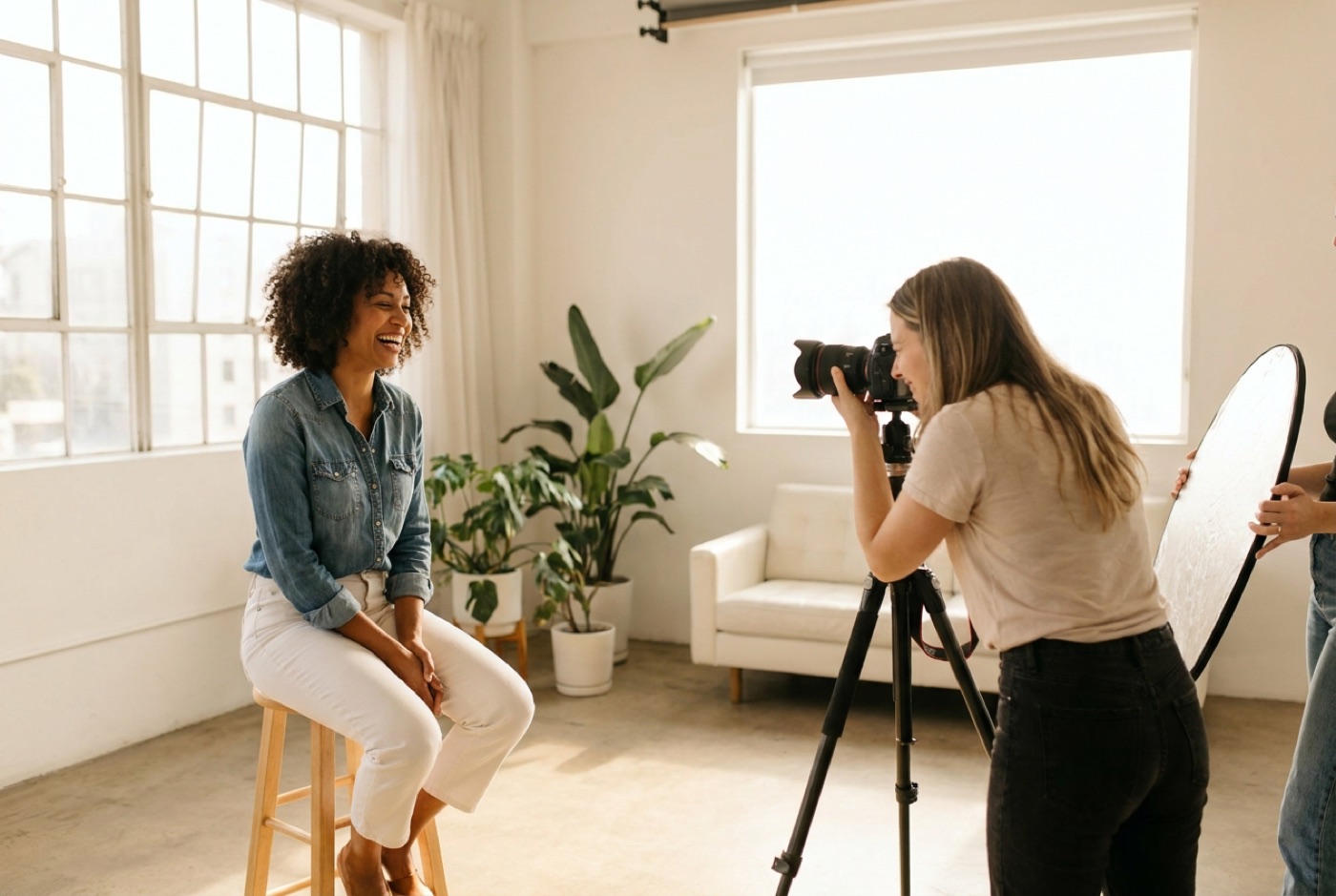
Commercial models sell the product, not the look — relatable, believable, everyday.
The short version
- A commercial model is hired for work that sells products and services to ordinary people: high-street retail, e-commerce, beauty, supermarket flyers, banking, travel, telecoms, healthcare, and government public-information campaigns.
- Commercial modelling is the bulk of paid model work in the UK. Day rates run from around £80 per hour for e-commerce to £1,500+ for full-day shoots, plus usage and image-buyout fees on top.
- Heights, ages and sizes are wide open. At TDA we cast commercial models from petite to 6'2", size 6 to size 30, ages 6 to 70+, every ethnicity and faith.
- Commercial modelling vs fashion modelling is the cleanest split in the industry. Fashion sells the brand idea, commercial sells the product. Most working UK models earn their living from commercial work.
- You apply with three honest digitals (headshot, mid-length, full-length), no makeup, daylight, plain background. Representation is free at TDA. No agency should charge you upfront.
A commercial model is the person you see in almost every advert and shopfront in the UK, even if you've never thought of them as a model. They are the parent in the supermarket flyer, the nurse in the NHS information film, the couple on the holiday brochure, the office worker on the bank's homepage, the runner in the trainer ad. If you have looked at a magazine, a billboard or a website in the last week, you have looked at commercial models doing their job.
This is the working layer of the industry. It is also the layer that pays. Below we walk through what commercial modelling actually covers in the UK, who gets booked, the height, age and size ranges that work, how it differs from fashion, the day rates to expect, and how to apply if this is the direction you want to take.
What is a commercial model?
A commercial model is a model hired to advertise a product, service or message to a general audience, rather than to wear designer clothing as art or storytelling. The job is to look believable as the person who would actually use what is being sold. Approachable, relatable, real. That is the whole brief in one sentence.
Commercial models are booked across e-commerce, beauty, retail, banking, healthcare, supermarket, telecoms, technology, automotive, travel, charity and government work. The brands you can name from memory hire commercial models every week of the year. So do the brands you have never heard of, plus a wide list of public bodies running campaigns through the Cabinet Office and the NHS.
The category often gets confused with "fashion modelling" because people picture one thing when they hear "model". In the UK, fashion is the smaller end of the business. Commercial is where the working roster spends its diary.
What does a commercial model actually do?
A commercial model turns up on a set or location and behaves like the person the brand needs the viewer to picture. That is the work, and it is harder than it looks.
A typical day might mean:
- Standing on a white sweep at an e-commerce studio, changing into 60 to 120 outfits for an online retailer.
- Pretending to read a screen, drink a coffee, hold a baby, walk a dog, run for a train, smile at a partner who is not really there.
- Doing the same gesture 30 times in slightly different ways so the director and the brand can pick the frame they need.
- Holding a product so the logo faces camera, without it looking like you are holding a product so the logo faces camera.
The skill is being natural on demand. A good commercial model is castable across briefs because they read as authentic. A casting director needs to look at a digital and immediately think, yes, that is the dad who buys this car, the woman who books this holiday, the student who uses this bank. If you can be that quickly, you book.
Types of commercial modelling work in the UK
The brief almost always falls into one of these categories. Knowing which one is on the call sheet tells you the rate, the pace, and the kind of day you'll be handed.
E-commerce. The volume work. Online retailers shoot 40 to 200+ products a day on a model. Pace is high, days are long, the look is clean and product-led. The biggest single chunk of paid UK model bookings.
Catalogue and brochure. Supermarket magazines, garden centre catalogues, in-store seasonal print, holiday brochures. Smaller crew than a TV ad, calmer pace than e-commerce, multi-look briefs.
Beauty and skincare. Tight, close-up work for cosmetics brands, hair brands and dermo-skincare. Booked for skin quality, eyes and lips as much as overall look. Hand and foot specialists also fit here for product-in-hand and detail shots.
High-street and supermarket advertising. Bigger campaigns from named high-street retailers and supermarket clothing lines. National billboards, bus shelters, social, in-store.
Banking, telecoms, energy, healthcare. Some of the most-booked corporate sectors. They want people who look like the customer base of a UK bank, mobile network or hospital. Wide age range, broad size range, every ethnicity, every faith.
Public information campaigns. Government, NHS, councils, charities. Smoking, road safety, vaccination, energy bills, mental health. Cast by representation, not aspiration.
TV commercials and stills. Some commercial models are hired for both moving image and stills. TV work is paid differently and typically goes through a stronger casting process with self-tapes.
Bridal, occasionwear and modest. A growing corner of commercial. South Asian bridal, modest occasionwear, hijabi commercial campaigns. Often booked from our Modest board.
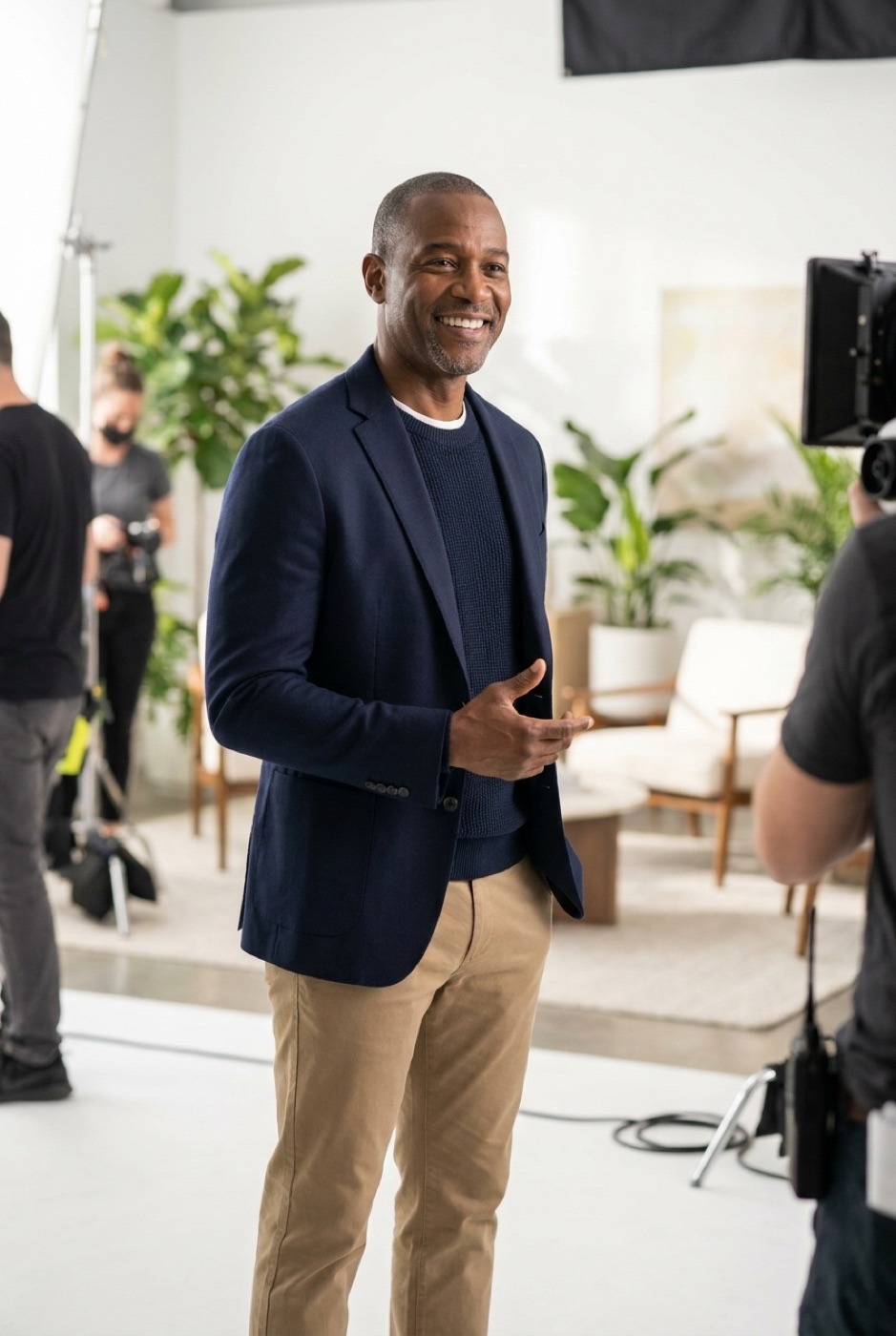
Commercial casting wants the customer the brand pictures — every age, every ethnicity.
Commercial modelling vs fashion modelling: what's the real difference?
Fashion modelling sells the brand. Commercial modelling sells the product. That is the cleanest line you can draw between the two, and it explains almost every other difference downstream.
Fashion casting prizes very specific proportions, "look", and an editorial face that photographs as a mood. It moves through runway, editorial print, designer e-commerce and big concept campaigns. The market is small, narrow on body type, mostly built around the London and Paris seasons, and a small percentage of bookings pay the headline numbers most people quote.
Commercial casting prizes castability. Can you be cast as the customer the brand wants to picture? The market is enormous: every retailer, every bank, every supermarket, every public body, every product brand. Body type, height, age and ethnicity ranges are wide open because the audience is wide open. Most UK working models earn their living here.
The other practical differences:
- Fashion shoots are concept-led; commercial shoots are product-led.
- Fashion test shoots aim for portfolio "story" images; commercial digitals aim to look like the model in the room.
- Fashion uses unusual proportions on purpose; commercial uses recognisable proportions on purpose.
- Fashion buyouts are sometimes huge but rare; commercial buyouts are smaller, more frequent, more reliable.
Neither track is "better". They are different jobs. Some models cross over; most pick a lane.
What height do you need to be a commercial model?
There is no fixed height requirement for commercial modelling. We sign and book commercial models from 5'0" to 6'2" depending on the board. The brand is hiring the type of person on screen, not a runway shape, so height is one detail among many.
Rough rules of thumb across our boards:
- Main commercial: anywhere from around 5'7" to 6'0" is common but not strict.
- Petite specialists: under 5'5", booked specifically because the brand needs a smaller frame, often for high-street brands with petite ranges.
- Tall specialists: 5'10"+ for sportswear, athleisure and tall ranges.
- Classic, curve, modest, family, kids: range is even wider, because the brief is about being the right person, not the right height.
When a brand briefs us, they almost never lead with height. They lead with age, ethnicity, vibe and product. Height comes up only when a specific shot needs it.
What is the age range for commercial models?
Commercial models in the UK are cast from 6 to 70+. Real ad audiences span every decade of life, and the casting briefs do too. The category that gets left out of most "what is a model" articles is older talent, and it is one of the busiest at TDA.
Our boards reflect the realistic spread:
- Family and kids: booked for supermarket, holiday, bank and toy campaigns.
- New faces and main commercial: roughly 18 to 35.
- Classic, mature and over-50s: booked constantly for banking, healthcare, retirement and lifestyle. Strong section of the diary. See our Classic board.
- Senior commercial: 65 to 80+. Wanted by brands and public bodies trying to cast realistic UK life.
The mature category is the one casting directors quietly say is under-supplied. If you are over 50 and have been told by someone that you are too old for modelling, you have been given outdated advice.
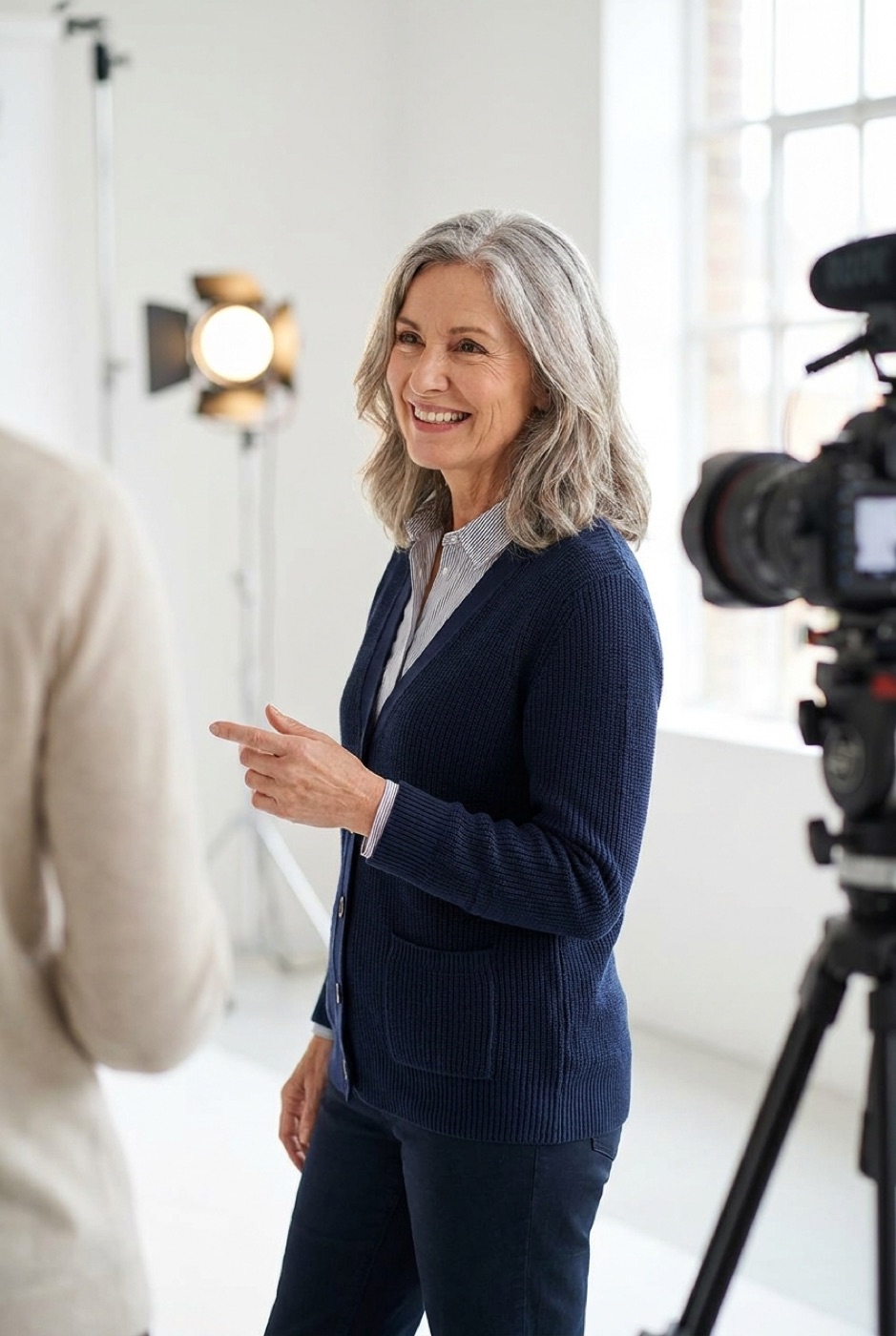
Over-50 commercial work is one of the busiest, most under-supplied corners of the diary.
What sizes does commercial modelling cover?
Commercial modelling covers every size from UK 6 to UK 30, with no upper or lower cut-off that holds across the industry. UK average dress size sits around a 16, and brands that want to look like their customer base cast accordingly.
The breakdown we work with:
- Straight-size commercial: roughly UK size 6 to 12.
- Mid-size: roughly UK size 14 to 18, traditionally under-represented but increasingly briefed in.
- Curve and plus-size: UK size 16 to 30+, booked from our Curve board. E-commerce, lingerie, swimwear, occasionwear, sportswear, denim and bridal.
The fastest-growing area inside UK commercial is curve and plus, driven by retailers extending their size ranges and brands updating campaigns to reflect actual customer bodies. The agencies that diversified casting earlier are ahead on the briefs that now come in.
How much do commercial models earn in the UK?
Commercial modelling rates in the UK vary by job type, usage, and how the images are bought. Day rates and hourly rates are the base; what often matters more is the "usage", which covers where the images appear, for how long, and in which territories.
Indicative ranges (typical examples, not promises):
| Booking type | Typical fee range |
|---|---|
| E-commerce, hourly | £80 to £150 per hour |
| E-commerce, day rate | £400 to £800 per day |
| Catalogue / brochure day | £500 to £1,000 per day |
| National stills campaign | £800 to £3,000 per day + usage |
| TV commercial shoot day | £1,000 to £2,500 + usage |
| Image buyout (national, 1 year) | £500 to £10,000+ |
| Image buyout (global, multi-year) | from £2,000 up to five figures |
Important caveats. UK commercial rates aren't fixed. They depend on the brand budget, the territory, the media (digital only, print, OOH, TV), the term (3 months, 6 months, 1 year, in perpetuity), exclusivity and the agency. The agency negotiates and takes a percentage commission. We do not promise specific earnings to any model because the diary is shaped by the brand demand of the quarter.
For broader context on how performer fees and usage are structured in the UK, the Equity union publishes negotiated guidance for performer work; commercial modelling sits alongside that framework rather than inside it.
A day on a commercial shoot
The morning starts with a call sheet, usually for an early arrival at studio or location. You'll have eaten, you'll have your model bag with the basics: neutral underwear, nude bra, hair ties, your own simple skincare, a charger, a book.
Hair and makeup goes first. Brief looks vary: e-commerce wants clean and natural, beauty wants a controlled retouch-friendly base, a campaign wants whatever the creative director called for. While that runs, the photographer's team prep the set or the rail.
Then you shoot. Through the day you'll move between looks (commercial shoots can run 30 to 120 product changes), between set-ups (different backgrounds, lighting, props), and between mood notes from the brand client on monitor. There will be breaks. There will be a wrap by the booked time. There will not be hours of artistic experimentation; commercial shoots are produced on schedules that have to deliver assets.
You'll be tired. Your face muscles will be tired in a way you didn't think faces could be tired. You'll get paid for that.
How to become a commercial model in the UK
The route in is straightforward and the same for everyone, regardless of height, size, age or background.
- Get three honest digitals. Not modelling photos, not glamour shots, not friend-with-a-camera ringlight portraits. Headshot, mid-length and full-length. No makeup. Daylight or neutral light. Hair down or off the face. Plain background. Phone is fine. You are not selling looks; you are showing the agent what they would send to a casting director.
- Apply directly to commercial agencies you respect. Pick agencies whose boards include people who look like you, and whose clients work in the sectors you want to be in. If a roster does not include your category, your application is unlikely to land however strong the digitals are. You can apply to TDA here. Applying is free. Any UK agency that asks for money upfront, demands a paid photoshoot to be considered, or charges a "registration fee" is not an agency you want to be signed to. That is a hard rule.
- Be patient with the answer. Bookers go through applications in batches. You may hear back in a week or in two months, and most applications get a no because boards run on category balance, not on talent ranking. A no is not a verdict on whether you are right for the work; it usually means the board already has people in your category and the diary does not need another right now. Try elsewhere, try again later.
- Once signed, treat it as a job. Reply to bookers fast. Keep your digitals up to date if your hair or weight changes. Show up early. Behave well on set. Booker decisions are made on who the brand wants back next time.
- Think long. Commercial modelling is a career where consistency outranks intensity. The models who earn the most over a decade are the easy-to-work-with castables who get booked twice a year by 30 different brands, not the people chasing a single huge campaign. Steady is the strategy.
TDA represents commercial models across women's, men's, classic, curve, modest, family and specialist boards. You can see the full roster from the main board and decide whether your look fits one of the lanes. If you'd rather just send your details, the apply page takes about five minutes. Either way, that's the door in for a commercial model in the UK in 2026, and it's open.